In today’s rapidly evolving world, education is no longer limited to textbooks, examinations and academic scores. Parents are increasingly searching for schools that nurture creativity, confidence, leadership, emotional intelligence and real-world problem-solving skills alongside strong academic foundations. This is where holistic education plays a transformative role.
At Cresmonde World School, the philosophy of learning goes far beyond classrooms. By combining globally respected curricula with experiential learning opportunities, the school creates an environment where students discover their passions, develop essential life skills and grow into confident individuals prepared for the future.
Whether families are exploring international schools in Mumbai, ICSE schools, or Cambridge curriculum options, understanding the importance of exclusive developmental activities can help them make informed decisions for their child’s future.
Why Holistic Development Matters More Than Ever
Holistic growth focuses on nurturing the intellectual, emotional, social, physical and creative dimensions of a child. Research consistently shows that students exposed to diverse learning experiences demonstrate:
- Better academic performance
- Stronger confidence and communication skills
- Higher emotional resilience
- Improved leadership abilities
- Greater adaptability to future careers
Modern parents looking for the best ICSE or IGCSE schools increasingly prioritise institutions that integrate extracurricular enrichment into everyday learning rather than treating activities as optional add-ons.
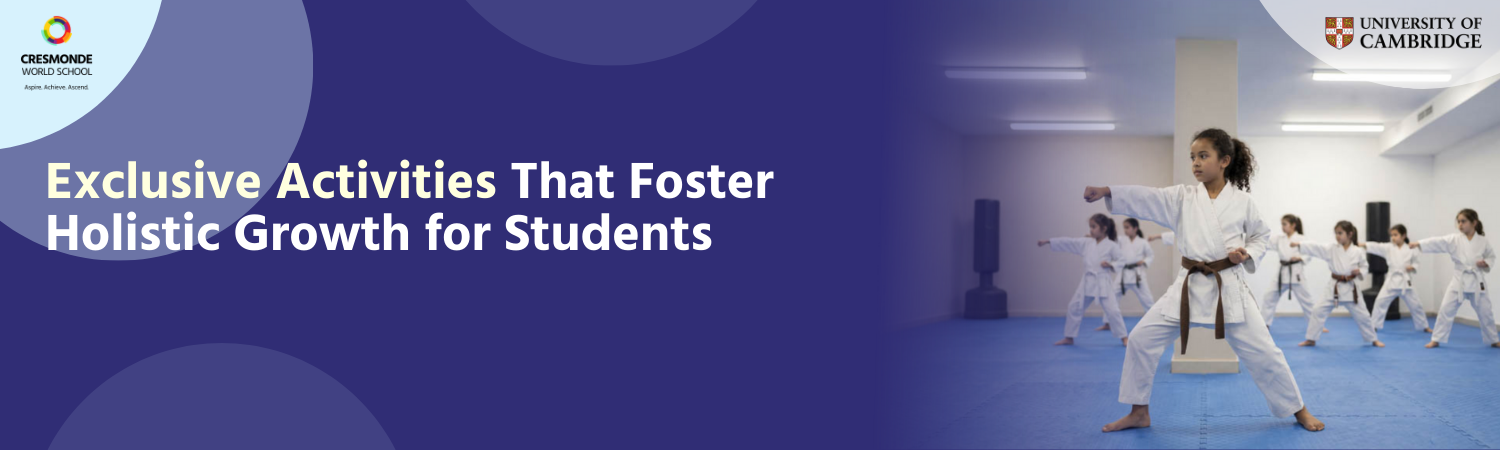
Exclusive Activities That Shape Well-Rounded Students
1. Performing Arts and Creative Expression
Music, dance, drama and visual arts play a crucial role in cognitive and emotional development. Through stage performances and artistic exploration, students learn:
- Self-expression and confidence
- Collaboration and teamwork
- Discipline and perseverance
- Creative thinking
Performing arts also improve memory, focus and public speaking abilities — essential skills for lifelong success.
2. Sports and Physical Development Programs
Physical education is a cornerstone of holistic education. Structured sports programs help students develop:
- Physical fitness and endurance
- Leadership and sportsmanship
- Strategic thinking
- Stress management
Participation in competitive and recreational sports also builds resilience, teaching children how to handle both success and failure constructively.
3. STEM and Innovation Labs
Hands-on exposure to science, technology, engineering and mathematics prepares students for future careers. Innovation labs encourage:
- Curiosity-driven learning
- Problem-solving skills
- Logical reasoning
- Technological confidence
Students move beyond theoretical knowledge to real-world application, which is a key differentiator in leading international schools.
4. Leadership and Life Skills Programs
Academic knowledge alone does not guarantee success in life. Leadership development programs help students cultivate:
- Decision-making abilities
- Communication skills
- Emotional intelligence
- Responsibility and independence
These skills are particularly valuable during secondary school years when personality development accelerates.
5. Global Exposure and Experiential Learning
Exposure to diverse cultures and perspectives broadens a child’s worldview. Activities such as educational field trips, collaborative projects and experiential learning initiatives enable students to:
- Connect classroom concepts with real-life experiences
- Develop social awareness
- Build confidence in unfamiliar environments
- Enhance critical thinking
Such opportunities are especially valuable in Cambridge and international curriculum environments.
6. Mindfulness and Emotional Wellbeing Programs
Mental health and emotional resilience are becoming essential priorities in education. Schools that integrate mindfulness, counselling support and wellbeing activities help students:
- Manage academic pressure
- Build self-awareness
- Improve concentration
- Develop emotional balance
A supportive environment ensures children thrive not just academically, but personally.
The Role of Curriculum in Holistic Education
A strong curriculum framework supports activity-based learning. Schools offering ICSE and Cambridge pathways often integrate:
- Inquiry-based learning
- Project-based assessments
- Interdisciplinary subjects
- Skill-focused evaluation
This approach ensures students are prepared for both national and global academic opportunities.
How Parents Can Identify the Right School
When searching for the right institution — whether primary schools or secondary schools — parents should consider:
✔ Variety of extracurricular programs
✔ Balance between academics and activities
✔ Infrastructure and facilities
✔ Faculty expertise and mentorship
✔ Focus on life skills and personality development
✔ Transparent admission process
The right school environment significantly influences a child’s confidence, curiosity and long-term success.
Preparing Students for the Future Through Holistic Education
The future belongs to individuals who can think critically, collaborate effectively, adapt quickly and innovate fearlessly. Schools that prioritise holistic development create students who are not only academically capable but also emotionally intelligent and socially responsible.
By integrating exclusive activities into everyday learning, institutions can unlock each child’s true potential — helping them aspire, achieve and ascend toward their goals.
Admissions Enquiry
Parents exploring school admissions or learning more about the admission procedure are encouraged to connect with the admissions team to understand curriculum options, facilities and activity programs available for different age groups.
A nurturing environment today builds confident leaders for tomorrow.